The Senate Math: 35 Seats, 13 Battlegrounds, and the Path to 51
With polls open, Democrats need a net gain of four seats to reclaim control, while Republicans can afford to lose only two, making the 13 competitive races decisive for the final two years of the Trump administration.
By Ana Castro ·
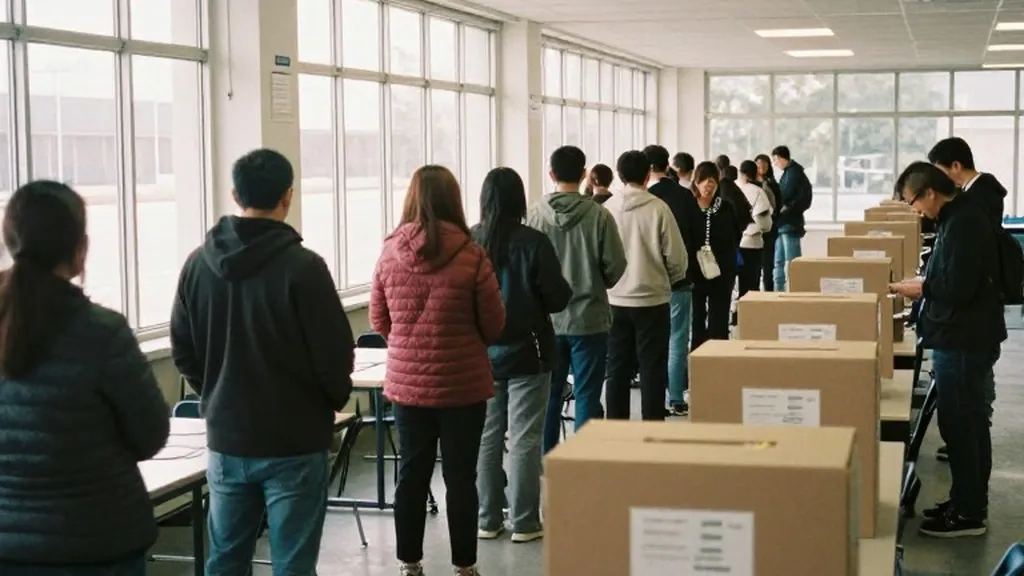
Voters across the United States are casting ballots on Tuesday, November 3, 2026, in a midterm election that will determine which party controls Congress for the remainder of President Donald Trump's second term. The United States Senate has 35 seats up for election this cycle, comprising 33 regular races and two special elections to fill the terms for Marco Rubio of Florida and JD Vance of Ohio. Currently, Republicans hold 53 seats, Democrats hold 45, and two independents caucus with the Democratic side. To secure a majority, Democrats must achieve a net gain of four seats. Republicans can lose no more than two seats and still retain control.
13 of the 35 Senate races are considered battlegrounds. These contests will largely dictate the outcome of the chamber. In the 13 Democratic-held seats up for election, incumbents such as Jon Ossoff of Georgia and Jeanne Shaheen of New Hampshire are facing significant challenges, though Shaheen is retiring. Republicans hold 20 of the 35 seats on the ballot. The two special elections are for the remnants of the six-year terms held by Rubio and Vance, both of whom moved to other positions. Winners in all 35 races will begin their terms on January 3, 2027.
The Associated Press describes the election as a referendum on the president's performance, noting that voters are struggling with high prices and anger over an unpopular war with Iran. AP-NORC polling indicates that 35 percent of U.S. Adults approve of Trump's job performance, while only 25 percent approve of his handling of the economy. Approximately seven in 10 adults say the country is heading in the wrong direction. Most voters who blame high prices point to the president. This economic sentiment is driving voter turnout, with more than 57 million people having already voted as of Monday, surpassing early vote numbers from four years ago in many closely watched states.
Democrats are described by the AP as cautiously optimistic, while Republicans are bracing for a potential loss in the House and fighting to hold the Senate. The margin for error is slim, with the AP noting that one or two seats could tip the balance in either chamber. In the House, all 435 seats are up, and Democrats need a net gain of three districts to take the majority. Republicans currently hold 218 seats, Democrats 214, and one independent holds a seat, with some vacancies remaining. Ballotpedia counts 46 battleground districts in the House, with 25 held by Democrats and 21 by Republicans.
The Senate battlegrounds include Alaska, Florida, Georgia, Iowa, Kansas, Maine, Michigan, Montana, Nebraska, New Hampshire, North Carolina, Ohio, and Texas. Ratings from Cook, Decision Desk, Inside Elections, and Sabato as of October 27 show Maine as a toss-up on all four ratings. Iowa is rated a toss-up or tilt Republican. Kansas is rated a toss-up to lean Republican. Alaska and Michigan are rated toss-ups to lean Democratic. Georgia is rated a lean to likely Democratic race. These ratings reflect the tight margins in 2024, where Trump won states like Maine by just a few points or where Harris won states like Maine by a similar margin.
Key matchups have been highlighted by the AP and PBS. In North Carolina, Democratic former Governor Roy Cooper faces former Republican National Committee chair Michael Whatley. In Georgia, Senator Jon Ossoff runs against Republican Representative Mike Collins. In Ohio, Democratic former Senator Sherrod Brown challenges Republican Senator Jon Husted. In Michigan, Republican former Representative Mike Rogers faces Democrat Abdul El-Sayed. In Texas, Republican Attorney General Ken Paxton, who won Trump's endorsement over Senator John Cornyn in the primary, runs against Democrat James Talarico. In Maine, Senator Susan Collins faces Democratic former State Senate President Troy Jackson.
Financial resources play a critical role in these races. The 2026 elections are expected to be the most expensive in history. Republican committees have outraised and outspent Democratic committees, aided by Trump-affiliated groups and Elon Musk. However, at the candidate level, Democrats have outraised their opponents. An AP analysis of AdImpact data shows that 88.1 percent of Republican general election TV ad spending went to states and districts that Trump won in 2024. This included more than $850 million in spending in areas where he won by 10 points or more. This spending strategy reflects the Republican focus on holding onto their Senate majority.
Redistricting also impacts the Senate race. Six states are using new congressional maps after mid-decade redistricting: California, Florida, Missouri, North Carolina, Tennessee, and Texas. Ohio is also using a new map. These changes may alter the political landscape in some districts, though Republicans tried to use redistricting to beat the traditional midterm pattern where a president's party loses seats. The new districts in Florida and elsewhere may not vote as drawn, adding uncertainty to the outcomes. Republicans hold 26 governorships and Democrats hold 24, with 36 governorships up for election. Democrats would need a net gain of two governorships to achieve a nationwide majority, a feat they have not accomplished since 2010.
Voter sentiment is split but leaning toward change. DCCC Chair Representative Suzan DelBene stated that the American people are angry and want change. RNC Chairman Joe Gruters countered that everything depends on turnout, asserting that if they turn out their voters, they will win. Voter James Moore, 57, a librarian in Raleigh, North Carolina, cited high taxes and healthcare costs as his primary concerns. Voter Mark Barker of Palm Beach Gardens, Florida, expressed support for the president, saying he thinks Trump is doing an awesome job. These individual accounts reflect the broader national debate over the cost of living and the direction of the country.