Georgia Economy: 7.5% Growth Amidst Two-Year Protest Crisis
Record tourism and Russian capital drive expansion even as citizens march against the government's suspension of EU talks.
By Gabriela Ivanov ·
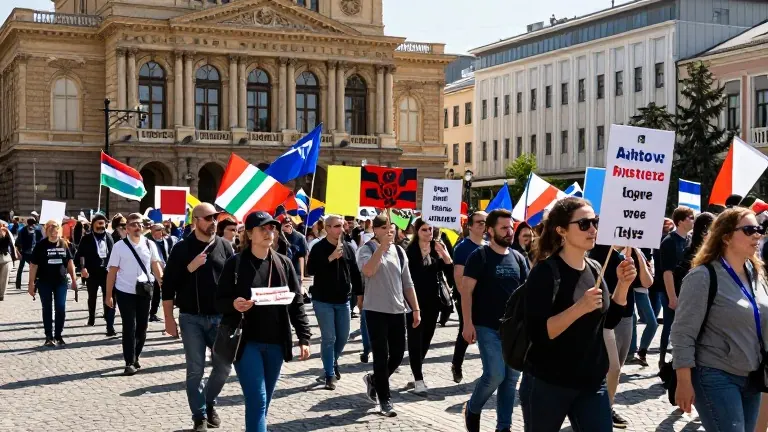
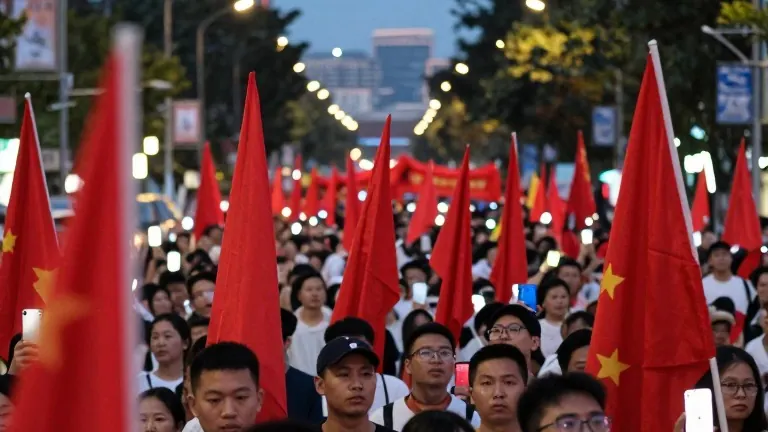
A fundamental tension defines Georgia in 2026: the country’s economy is expanding rapidly, yet its streets remain dominated by a protest movement that has lasted two years. On Monday, the anniversary of the contested parliamentary elections that triggered this crisis, demonstrators in Tbilisi are expected to march again against the government of Prime Minister Irakli Kobakhidze. The conflict pits a populace eager for European integration against an economy that relies heavily on ties to Russia and a booming tourism sector.
The economic data reveals a stark divergence from the political mood. In 2025, Georgia recorded more than 5.5 million international tourist visits. This figure represents an 8.4% increase over 2024 levels and is nearly ten times higher than the approximately 560,000 visitors recorded two decades ago. The Georgian National Tourism Administration attributes this surge to the country’s historic sites, landscapes, and post-Soviet cultural atmosphere.
The visitor base is diverse, drawing travelers from Europe, the Middle East, and large numbers from Russia. Since the full-scale invasion of Ukraine in 2022, tens of thousands of Russian citizens have relocated to Georgia. These residents have injected capital into the local economy by opening businesses and purchasing homes. While this activity supports growth, it has also intensified pressure on the property market, a source of ongoing friction for a population that still views Russia as an occupying power due to conflicts in South Ossetia and Abkhazia.
The political crisis ignited on October 28, 2024, two days after the disputed elections. Protests peaked in November 2024 when the Georgian Dream party, in power since 2012, announced it would not open EU accession negotiations before the end of 2028. This decision followed Georgia’s grant of EU candidate status in 2023. Critics accuse the ultraconservative party of authoritarianism and of pivoting the country closer to Moscow, a move that contrasts with the majority citizen preference for closer European ties.
The country’s leadership remains closely tied to its economic benefactor. Bidzina Ivanishvili, a billionaire who made his fortune in Russia during the 1990s, founded Georgian Dream in 2012. He served as prime minister between 2012 and 2013 and funded the renovation of the Rustaveli theatre, a symbol of national independence. Now in his 70s, Ivanishvili’s influence looms large over the current administration.
Georgian GDP grew by 7.5% in 2025, marking five consecutive years of expansion. This growth is underpinned by trade, remittances, tourism, and energy imports from Moscow. Despite this macroeconomic performance, the standard of living for many remains modest. Unemployment, low wages, and widespread poverty persist, while many rural areas continue to lose population.
The geopolitical context adds complexity to these domestic issues. Relations with the European Union have deteriorated, with Brussels criticizing Tbilisi on rule of law and political repression. Meanwhile, a strengthening Russian position in Ukraine could increase Moscow’s leverage in the Caucasus. Georgia, a republic of fewer than 4 million people sandwiched between Russia and Turkey, finds its future entangled in these wider tensions.
The protest movement continues to shape the national dialogue. From Avlabari Square to Freedom Square, citizens chant against the current government, demanding a return to democratic norms and a definitive path toward Europe. The juxtaposition of record visitor numbers and sustained civil unrest defines the current moment in Georgian history.