Lula Secures Fourth Term After Turnout Surge Reverses First-Round Deficit
The 80-year-old leader defeated Flávio Bolsonaro by 4.3 million votes, ending a three-week period of uncertainty following a narrow loss in the initial election.
By Gabriela Ivanov ·
Luiz Inácio Lula da Silva has won his fourth term as president of Brazil, defeating 45-year-old challenger Flávio Bolsonaro in a runoff held on Sunday. With nearly 99% of ballots counted, Lula secured 51.75% of the vote against 48.25% for Bolsonaro. This result places Lula ahead by 4.3 million votes, a dramatic reversal from the 2.2 million vote deficit he held after the first round in early October.
The victory marks a historic shift in Brazilian politics. Since the country returned to democracy in the 1980s, no candidate who finished second in the first round had previously won the runoff. For three weeks, Lula's initial loss cast doubt on his political future and left progressive voters uncertain. The turnaround appears driven largely by voter turnout, which Lula’s allies identified as his strongest asset. Abstention rates fell from a record 21.08% in the first round to 19.21% in the runoff. The earlier high abstention rate had disproportionately hurt Lula, whose supporters often live farther from polling stations.
Reginaldo Lopes, a key ally of Lula, described the feeling as "incredible" as the results were confirmed. He stated that Brazil is sending a message to the world about the extreme right and that the country will now "reorganize the democratic forces." Lula, who turns 81 on Tuesday, first rose to power as a union leader in the industrial suburbs of São Paulo in the late 1970s. After losing presidential bids in 1989, 1994, and 1998, he became Brazil's first elected working-class president in 2002. He served two consecutive terms before returning to office in 2022 after defeating Jair Bolsonaro, the father of this year's candidate.
The result is a major setback for the Bolsonaro family. Jair Bolsonaro is serving a 27-year sentence for plotting a coup and is currently under house arrest in Brasília. He had hoped for release and a government role if his son had won. His son, who watched the count from Brasília, faced anger and bewilderment upon confirmation of the loss. The outcome also impacts US President Donald Trump, who viewed Brazil as a key ally in Latin America. Trump had hoped Brazil would join pro-Trump leaders in Colombia, Ecuador, Chile, and Argentina.
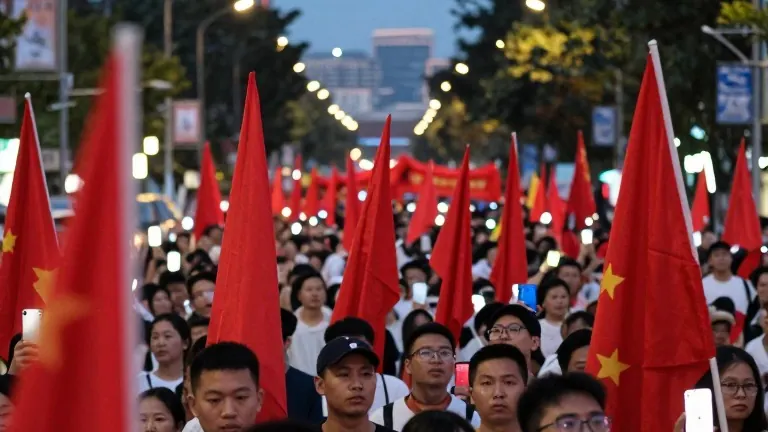
Lula's supporters demonstrated their strength on Saturday with rallies in Rio de Janeiro and São Paulo. More than a million people gathered on Copacabana beach, while a larger crowd marched on Paulista Avenue. On Sunday evening, hundreds returned to Paulista Avenue to watch the count, waving red flags bearing Lula's face. Camilo Buarque, 35, said, "This is democracy." Many in São Paulo expressed anger over an apparent attempt by pro-Bolsonaro politicians to disrupt the vote by sabotaging public transport in areas that lean toward Lula. Lucas Lopes, 32, called the effort "another coup attempt." The alleged disruption failed. Caio Marques, 40, noted, "In the first round the left failed. But in the second round they woke up."