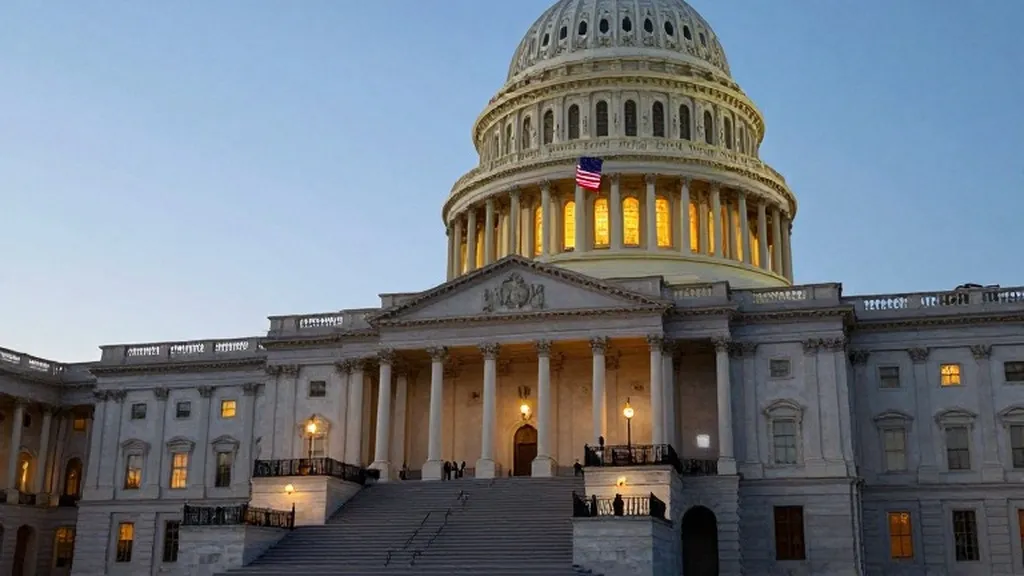
Trump's $5,000 'Dividend' Promise Collides With Democratic Wave
Speaker Mike Johnson admits the payout needs congressional approval, a hurdle that now sits in Democratic hands after a decisive midterm sweep.
By Gabriela Ivanov ·
President Donald Trump’s pledge to mail a $5,000 check to every adult American citizen has effectively evaporated following Tuesday’s elections. The promise, which he made at the Republican Midterm Convention in Dallas, was explicitly conditioned on his party retaining control of both the House and the Senate. With Democrats now holding majorities in both chambers, the financial instrument that was meant to reward loyal GOP voters has been left without a legislative path forward in the short term.
The stakes for this pledge were high, as it was framed as a direct response to the country's economic performance. At the convention, Trump told the crowd, 'If the Republicans win, you win with us and you get $5,000.' He named the initiative the Trump dividend and argued that the nation's 'tremendous economic success' provided the necessary funding. He compared the payout to corporate shareholders receiving cash, suggesting that American workers should receive a similar benefit from the administration’s fiscal policies.
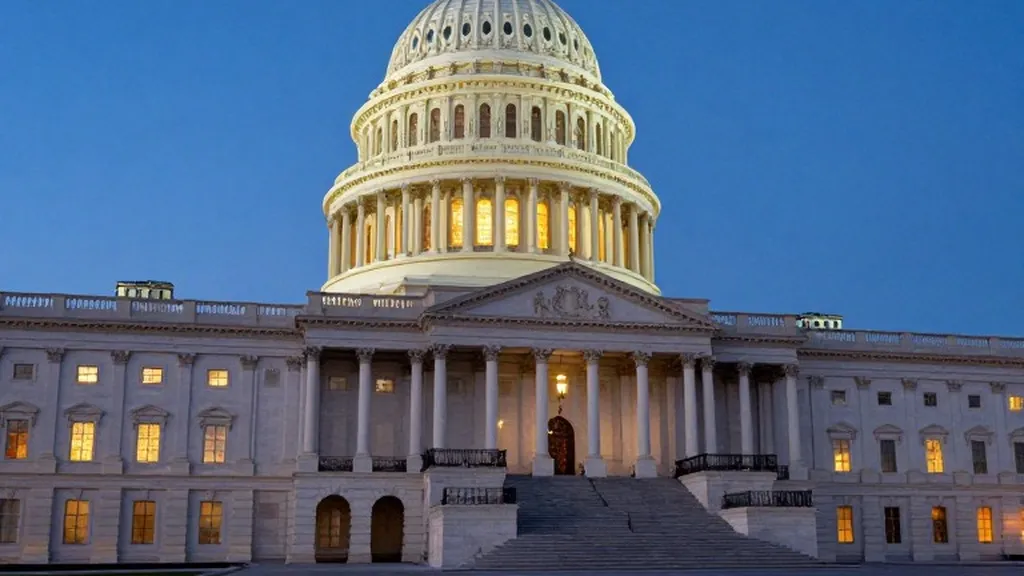
However, the mechanics of the promise were always a point of contention. While Trump initially suggested the payments could be made without new legislation, House Speaker Mike Johnson offered a more grounded assessment. Speaking on Sunday, Johnson stated that congressional approval would be required. 'I would assume, yes, he'd need Congress to act, and that's a creative idea,' Johnson said. He pledged to work toward making it happen, but his comments acknowledged the constitutional necessity of the legislative branch in authorizing such a massive expenditure.
The election results have significantly complicated Johnson’s task. Democrats have secured a majority in the House and the Senate, flipping the balance of power in Washington. According to Ballotpedia, Democrats won at least 43 House seats and seven Senate seats, all of which were previously held by Republicans. This shift means that the party that was supposed to receive the dividend is now in the minority, while the party that opposed the payout controls the levers of legislative approval.
The cost of the dividend was a major factor in the skepticism surrounding it. The U.S. Census Bureau estimates there are about 245 million adult citizens, which would make the total cost of the checks approximately $1.2 trillion. This figure would place a significant strain on the federal budget, which is already facing a deficit of nearly $1.8 trillion. Critics argued that such a massive injection of cash could exacerbate inflationary pressures, a concern that resonated with voters who cited the cost of living as a primary reason for their vote.
Bipartisan criticism was evident even before the ballots were counted. Republican lawmakers expressed concern about the price tag, with Texas Representative Chip Roy describing dependency on government payments as 'evil and soul-sucking.' Democratic leaders saw the promise as a classic election-year gambit, an attempt to buy votes with a check that might never arrive. The timing of the announcement, just days before the midterm election, fueled perceptions that the administration was using the promise as a final push to energize its base.
PolitiFact’s analysis of the proposal highlighted the obstacles facing the payment. The fact-checkers noted that the biggest payment was 'far from certain,' pointing to the lack of a formal plan from the White House for how the checks would be distributed. They also pointed out that while Trump cited tariff revenues as a potential funding source, the One Big Beautiful Bill Act passed in 2025 did not include a separate provision for a tariff dividend. This legislative gap meant that the money would have to be raised through a new bill, a process that requires the cooperation of both chambers of Congress.
Election law experts weighed in on the legality of the promise, noting that while it is constitutionally protected as campaign rhetoric, it does not create a legal obligation for the government to pay. Rick Hasen, a professor at the UCLA School of Law, explained that candidates are allowed to make such promises, comparing it to a candidate promising to cut taxes or expand social programs. He noted that as long as the promise is public and applies to all voters, it is a standard part of the political process, even if the practical implementation is difficult.
The administration’s previous attempts at similar payouts have also set a precedent of uncertainty. Trump had promised $2,000 tariff dividend checks in November 2025, but those checks never went out. Similarly, the 'DOGE dividend' proposed by Elon Musk and endorsed by Trump in 2025 was based on savings that were later found to be overstated by government watchdogs. This history of unfulfilled financial promises adds a layer of skepticism to the current $5,000 pledge, leading many voters to view it as a rhetorical tool rather than a firm policy commitment.
With Democrats now in control of Congress, the immediate path to enacting the Trump dividend is blocked. Speaker Johnson has said he will work to find consensus, but with a new Democratic leadership in place, the priority may shift to other legislative goals, such as investigations and cost-of-living measures. The promise that defined the final days of the campaign now serves as a reminder of the high-stakes gamble the administration took, one that ended with the party receiving the reward losing the power to deliver it.