The $0.00 Dividend: Trump's New Mandate for AI Data Centers
The President has demanded that hyperscalers pay local communities a share of their energy costs to win over residents and stabilize the AI buildout.
By Giulia Donovan ·
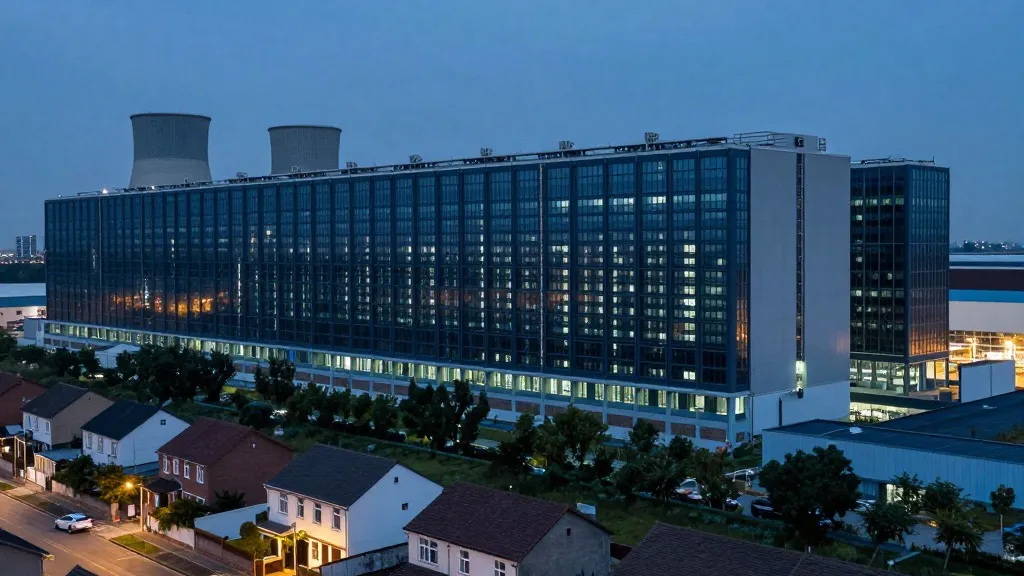
President Donald Trump has issued a direct challenge to the leaders of the artificial intelligence industry. He has called for a mandatory financial dividend that data center builders and hyperscalers must pay to the local communities they impact. The goal is to offset rising energy prices and, in some cases, lower them. This move aims to make the massive facilities more acceptable to residents who have often resisted their arrival.
In a post on Truth Social, the President outlined the specifics of his proposal. He warned that data centers would not only be required to generate their own electricity, a stance he has previously championed, but also to return or sell excess power back to the local grid. This requirement is designed to address the immediate pain points that have fueled recent opposition to these projects.
The background of this mandate is rooted in growing tensions across the United States. Local communities have increasingly protested the presence of AI data centers. Residents cite several major concerns, including soaring electricity bills, persistent noise pollution, and significant water shortages. Additionally, issues such as air pollution and deforestation have made these facilities a source of friction in small towns and rural areas.
The administration is keen to maintain its competitive edge against China in the global AI race. To achieve this, it is seeking to win back public favor by ensuring that data centers contribute something tangible to the neighborhoods they occupy. While the practical details of how these payments will be calculated are not yet defined, the focus on electricity suggests a direct link to utility costs.
A recently passed act already orders data centers to cover the costs of necessary grid upgrades. This prevents those expenses from being shifted to local taxpayers. The new dividend proposal builds on this framework. It envisions a scenario where the excess electricity generated by these facilities helps lower the energy bills for nearby homes. This approach attempts to turn a potential burden into a shared benefit.
Trump emphasized the economic incentive for local approval in his message. He noted that data centers which were once highly unpopular in specific areas have become extremely popular once a financial deal was reached. To drive this process forward, he urged industry leaders to make deals and get the projects built. The tone of the post was urgent, reflecting the administration's desire to accelerate infrastructure development.
However, the success of this strategy remains uncertain. While the economic aspect is a critical part of the equation, it is only one facet of a complex problem. Residents still face challenges related to enormous water consumption, ecological damage, and various forms of pollution. These environmental impacts continue to make AI data centers a difficult sell in many locations, regardless of financial compensation.
Observers have raised questions about the term dividend itself. Companies typically pay dividends only when they are profitable. New data center builds often incur high initial construction costs that take time to recoup. This raises doubts about whether these payments will be consistent or substantial in the early years of operation. The financial model must account for these initial losses.
There are also technical considerations regarding the power source. In the short term, data centers often rely on gas-powered generators to meet their immediate energy needs. These units can be noisy and less efficient than conventional power plants. For residents living in close proximity, this may not be the ideal solution. Longer-term generation options take more time to come online, leaving a gap in the near future.
The next steps involve seeing how the industry responds to this mandate. Whether the proposed dividends are sufficient to win over skeptical communities is yet to be determined. The administration hopes that by tying financial benefits to local approval, it can smooth the path for future builds. The coming months will reveal if this approach can balance the needs of the AI sector with the concerns of the communities that host them.