Trump's $5,000 Dividend Promise Collides With Democratic House Control
The president pledged cash payments if Republicans kept Congress, but the party just lost control of both chambers.
By Gabriela Ivanov ·
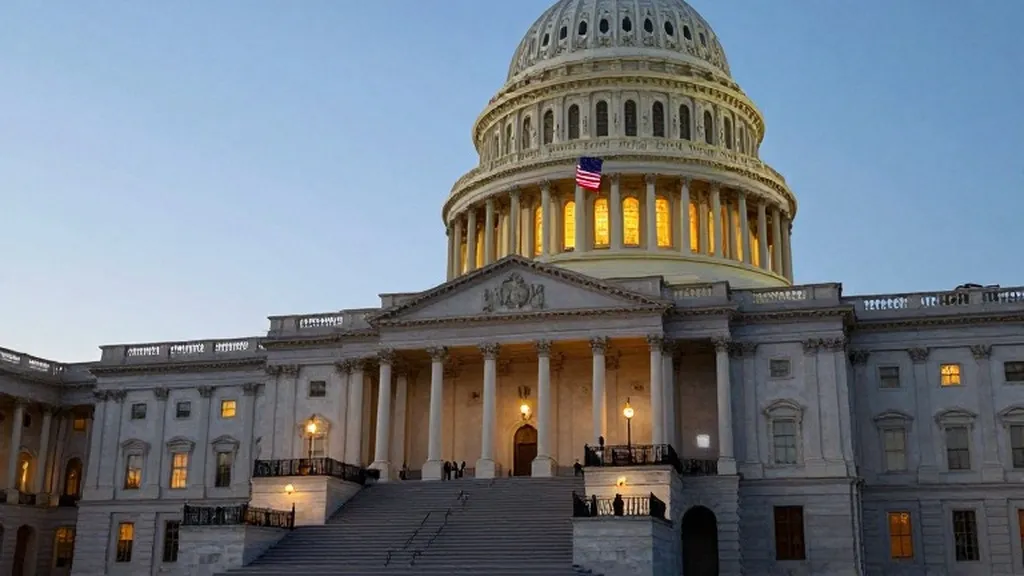
President Donald Trump stood on a stage in Dallas last week and promised a financial windfall to every American adult if his party held onto power in Washington. He called it the Trump Dividend, a $5,000 payment tied directly to the outcome of the midterm elections. The speech was designed to energize the base, framing the election as a choice between economic success and stagnation. However, the political landscape has shifted dramatically since that moment. Democrats have now secured majorities in both the House and the Senate, effectively nullifying the specific condition Trump set for the payout.
The promise was made during the Republican Midterm Convention, where Trump told the crowd, 'If the Republicans win, you win with us and you get $5,000.' He cited the nation's 'tremendous economic success' as the justification for the distribution. The proposal was unusual for a sitting president to make in the final stretch of a midterm cycle, leading many observers to question whether it was a strategic bid to influence voter behavior. The condition was clear: Republicans had to win control of both the House of Representatives and the United States Senate.
Speaker Mike Johnson, who led the House for Republicans, acknowledged the complexity of the proposal. He stated that congressional approval is needed for such a massive expenditure. 'I would assume, yes, he'd need Congress to act, and that's a creative idea,' Johnson said. He pledged to work through the details if Republicans had retained power, noting that Congress would have to find consensus. With Democrats now holding the gavel and the majority in both chambers, that path is significantly more difficult, if not entirely closed, for the next two years.
Fact-checkers and financial analysts have long viewed the $5,000 check with skepticism. PolitiFact found that the biggest payment is far from certain, noting that the administration had no formal plan for funding the checks. The cost is estimated at over $1 trillion, a sum that would place a heavy burden on the federal budget. The White House suggested that tariff revenues could cover the expense, but experts from the Tax Foundation argued that the projected revenue was nowhere near sufficient to cover the cost of the dividend over a decade.
Bipartisan criticism emerged immediately after the announcement. Some Republican lawmakers questioned the fiscal responsibility of the plan, while Democrats argued it was a classic case of buying votes. Election law experts noted that while the promise is likely legal under First Amendment protections for campaign speech, the practical hurdles were immense. The proposal required not just a simple majority in the House but also a supermajority in the Senate to overcome potential filibusters, a threshold that seemed unlikely even when Republicans held the seat.
The timing of the promise coincided with a period of high voter anxiety over the cost of living. Polls indicated that the economy was the top concern for voters, with many reporting that inflation had caused severe financial hardship. Trump’s approval rating was low, with only one-third of adults approving of his handling of the presidency. The dividend was an attempt to counter this negative sentiment by offering a tangible benefit. However, the loss of congressional control means that the primary vehicle for delivering this benefit is no longer under his party's command.
Democrats, who now control the legislative agenda, have signaled that they will focus on oversight and cost-of-living measures. Speaker-elect Hakeem Jeffries has emphasized the need to hold the administration accountable, suggesting that a $1 trillion check-writing program is not at the top of the priority list. The new Democratic leadership has indicated a preference for guardrails and investigations over large-scale stimulus checks, particularly in an environment where the national deficit is already high. This creates a potential conflict between the president’s campaign promise and the legislative reality of the next two years.
The political implications of the lost condition extend beyond the immediate financial question. It highlights the tension between a president’s desire to reward his base and the constitutional requirement for Congress to control the purse strings. Trump’s past attempts to send payments, such as the proposed DOGE dividend and the $2,000 tariff checks, also failed to materialize. This pattern has led to a degree of voter fatigue regarding such promises. The new Democratic majority is likely to scrutinize any executive branch initiatives that bypass the legislative process or rely on untested revenue sources.
Speaker Johnson’s comments on Sunday, just before the election results were finalized, showed a party preparing to fight for the promise. He described Trump as the 'big ideas president' and committed to implementing as much as possible. Now that the map of power has changed, those words carry a different weight. The Democrats who won their seats by appealing to economic relief and oversight are in a position to block or amend any bill that attempts to fund the dividend. The challenge for the administration will be to determine if it can find the political capital to push the issue through a hostile legislature.
The $5,000 dividend remains a talking point, but its path to realization is fraught with obstacles. The loss of the House and Senate control means that the condition set in Dallas is no longer met. While the president has vowed to make the payments happen, the legislative arithmetic required is now significantly more complex. The coming months will reveal whether the promise was a serious policy proposal or a campaign tactic that has now outlived its immediate political purpose. The focus in Washington will likely shift to how the new Democratic majority addresses the economic concerns that drove the election results.