Trump's $5,000 dividend promise now faces a Democratic Congress
With Republicans losing control of both chambers, the costly pledge made in Dallas is now a legislative hurdle for Speaker Mike Johnson.
By Ana Castro ·
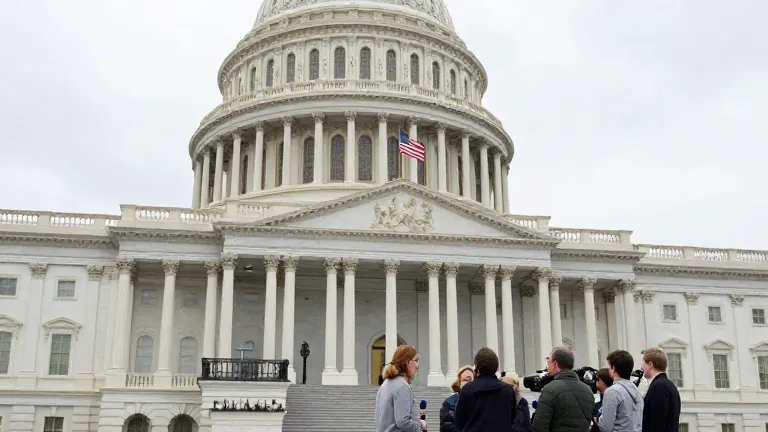
President Donald Trump promised a $5,000 payment to every American adult if Republicans retained control of Congress in the November 3 midterm elections. The pledge, dubbed the Trump dividend, was made at the Republican Midterm Convention in Dallas. However, the election results have fundamentally altered the political landscape for this proposal. Democrats have won majorities in both the U.S. House and the Senate, according to election data. This shift means the party that did not make the promise now holds the power to approve or reject the spending.
The election outcome is decisive. Democrats gained at least 43 House seats and seven Senate seats, flipping control of the federal government. In the House, Democrats will hold a majority of at least 250 to 157. In the Senate, they hold a 54 to 44 majority. This represents a significant swing against the president's party, with Republicans losing at least 42 House seats and seven Senate seats. The new Democratic Congress will not convene until January 2027, but the path to funding the dividend is now blocked by the party that did not make the promise.
Speaker Mike Johnson, a Republican from Louisiana, acknowledged the need for legislative action. He stated that congressional approval is required to send the checks. Johnson said he would work to implement the proposal, describing it as a creative idea. He pledged that Congress would find a consensus to move the bill forward. However, with Democrats now controlling the legislative agenda in both chambers, securing that consensus will be a challenging task for the outgoing Republican majority.
The financial scale of the promise is immense. The U.S. Census Bureau estimates there are about 245 million adult citizens. Sending each of them a $5,000 check would cost approximately $1.2 trillion. This amount exceeds the total projected tariff revenue for the coming decade, according to Erica York, a senior economist at the Tax Foundation. Trump cited tariff revenues as a potential funding source, but fiscal experts have raised doubts about the feasibility of such a large payout given the current economic conditions.
The country is already facing a nearly $1.8 trillion annual budget deficit. Adding a $1.2 trillion expense would put further strain on the national debt. Kenneth Rogoff, a former chief economist at the International Monetary Fund, warned that the spending would increase the odds of a debt crisis in the next five years. The economy is currently dealing with persistent inflation and rising interest rates, making large, unfunded mandates a point of contention for lawmakers on both sides of the aisle.
Bipartisan criticism of the plan began before the election. Some Republicans questioned the price tag and the logic of the payment. Texas Congressman Chip Roy wrote that dependency is evil and soul-sucking in all its forms. Democratic leaders also voiced concerns, with Senator John Fetterman making a surprise video appearance at the Republican convention to offer a contrasting vision. The potential payout raised immediate questions about whether the president was attempting to buy votes, a tactic that election law experts noted is generally protected by the First Amendment as part of campaign rhetoric.
The promise is the latest in a series of financial pledges that have not fully materialized. In November 2025, Trump proposed $2,000 tariff dividend checks, which never went out. In early 2026, military service members received a $1,776 warrior dividend. Elon Musk had previously suggested a $5,000 DOGE dividend based on claimed savings, but the agency's actual savings were far lower than the initial estimates. These precedents add to the skepticism surrounding the new $5,000 pledge.
The Democratic victory in the midterms was driven by voter frustration with the cost of living and the war in Iran. The AP Voter Poll found that three-quarters of voters said the economy is not so good or poor. About 8 in 10 reported that inflation caused financial hardship for their households. These economic pressures make the prospect of a trillion-dollar dividend particularly difficult to justify to a new Democratic Congress tasked with addressing these very concerns. The new leaders will likely prioritize oversight and spending limits over new large-scale payments.
Senate Majority Leader John Thune and House Speaker Mike Johnson have expressed frustration at the timing of various political moves, including impeachment resolutions for Defense Secretary Pete Hegseth. The focus on the Iran war and other executive actions has dominated the final weeks of the Republican majority. As the new Congress prepares to take office, the Trump dividend will compete with other legislative priorities. The ability to pass such a bill will depend on how many Republicans are willing to work with the new Democratic leadership to reach a compromise.
The White House has maintained that the payments are possible due to the strong economy. Trump told reporters that the United States is taking in so much money that the payment is easy enough to handle. However, the formal plan for distributing the checks has not been announced. The White House press release provided no details on the logistics of the payout. As the new Congress forms, the administration will need to present a clear legislative path to the new Democratic majority to see the promise fulfilled.