Democrats Seize Congress and State Power in Historic 2026 Midterm Sweep
Democrats have captured the House and Senate while flipping governors' offices in four states, forcing a divided government that prioritizes cost-of-living relief over Republican legislative dominance.
By Ana Castro ·
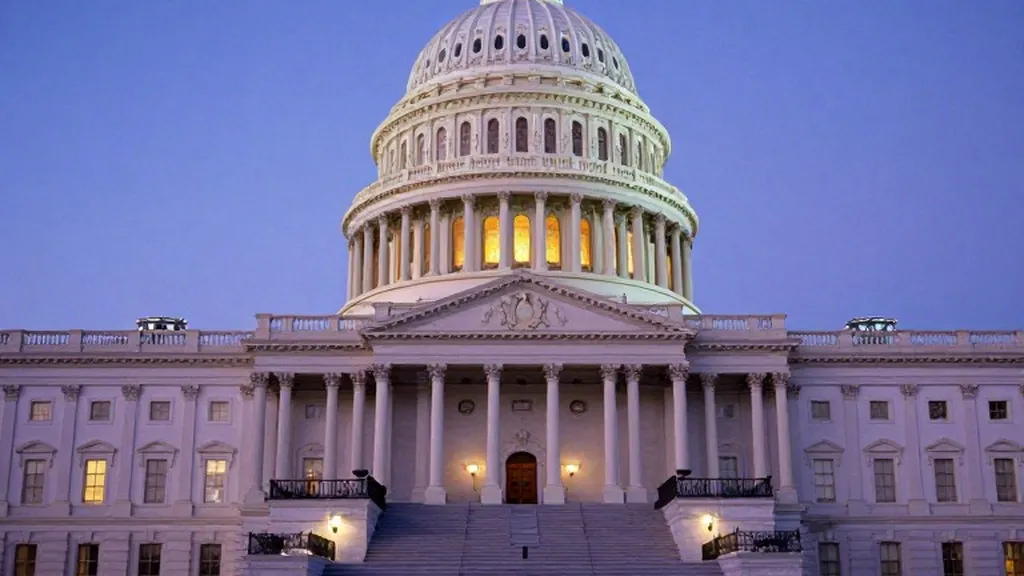
Democratic candidates secured control of both chambers of the United States Congress and captured significant state-level power in the November 3, 2026 midterm elections. The Associated Press reports that Democrats won 233 of the 435 House seats and 20 of the 35 Senate races, effectively ending two years of unified Republican control in Washington. This decisive shift creates a divided government where Congress is positioned to act as a coequal branch capable of challenging the executive branch and reversing recent policy directions.
The victory in the House represents a net gain of 30 seats for the Democratic Party. In the Senate, Democrats gained seven seats that previously belonged to Republicans, securing a majority that allows them to set the legislative agenda for the 119th Congress. The results reflect a broad voter rejection of the incumbent president's party, driven by widespread dissatisfaction with the economy and the ongoing war in Iran.
State governments saw a similar partisan realignment, with Democrats winning full control of both legislative chambers and the governor's office in at least five states where they previously shared power. Ballotpedia confirms that Democrats won 22 of the 36 gubernatorial races, taking the offices in Georgia, Iowa, Ohio, and Texas. These wins mark the first time Democrats have controlled the Texas House since 2002 and include the election of Gina Hinojosa as the state's first Democratic governor since 1994.
House Democratic Leader Hakeem Jeffries stated that the party is prepared to deliver on the promise of dramatic change. He indicated that the new leadership will focus on lowering the costs of gas, groceries, and other essential goods. Jeffries also outlined a plan to reverse cuts to healthcare programs such as Medicaid and the Affordable Care Act, addressing key concerns raised by voters during the campaign.
Vice President JD Vance attributed Republican losses to the war in Iran, while President Donald Trump suggested a conciliatory tone but warned of potential gridlock. Trump stated he did not want to spend two years vetoing legislation, signaling a willingness to work with the new Democratic majority. However, the AP Voter Poll indicated that about two-thirds of voters believed the president did not have the right priorities during the campaign, a sentiment that likely contributed to the party's defeat.
Former Attorney General Eric Holder, chair of the National Democratic Redistricting Committee, described the Republican redistricting efforts as systematically dismantled. He noted that voters chose to elect a new Democratic majority rather than accept the maps drawn by President Trump and state Republicans. The redistricting plan, which aimed to create safer Republican districts in states like Texas and Florida, failed to prevent Democratic gains in those very areas.
Democratic Rep. Jared Moskowitz, who won reelection in a redrawn Florida district, said voters were concerned about the economy and the ability to afford a good quality of life. He noted that the redistricting process also angered voters, who felt their representation had been manipulated. Moskowitz stated that Republicans spent significant resources attempting to defeat him but ultimately failed to stop the Democratic wave in his district.
The new majority faces immediate pressure to address the high cost of living, which was the top issue for voters. About three-quarters of voters described the economy as not so good or poor, while roughly eight in ten said inflation had caused financial hardship for their households. Democrats plan to use their new power to impose checks on the president and launch a robust oversight agenda to hold the administration accountable.
Rep. Robert Garcia, the top Democrat on the House Oversight Committee, issued a brief warning to the administration, stating that it was time to lawyer up. Sen. Ron Wyden, the top Democrat on the Senate Finance Committee, emphasized the importance of subpoenas in the coming investigations. These signals suggest that the new Congress will be aggressive in its pursuit of accountability and transparency in the executive branch.
The election results also impact the balance of power in state legislatures, with Democrats breaking or preventing Republican supermajorities in nine legislative chambers across eight states. This change means that in states like Iowa, Ohio, and North Carolina, Republicans will need the help of Democratic lawmakers to override a Democratic governor's veto. The shift provides Democrats with more opportunities to influence state policies on education, healthcare, and infrastructure.
Democratic leaders emphasized the importance of working with Republicans in statehouses to move forward. Wisconsin's David Crowley and Minnesota's Amy Klobuchar, both newly elected or reelected governors, expressed a desire for bipartisanship. Klobuchar specifically warned her supporters that she might not do everything they like, indicating a pragmatic approach to governance that prioritizes progress over ideological purity.