Obama targets Detroit voters to erase El-Sayed's Wayne County deficit
The former president campaigned on early voting day, attacking Trump's tariffs and promising to secure a healthcare win for the doctor.
By Gabriela Ivanov ·
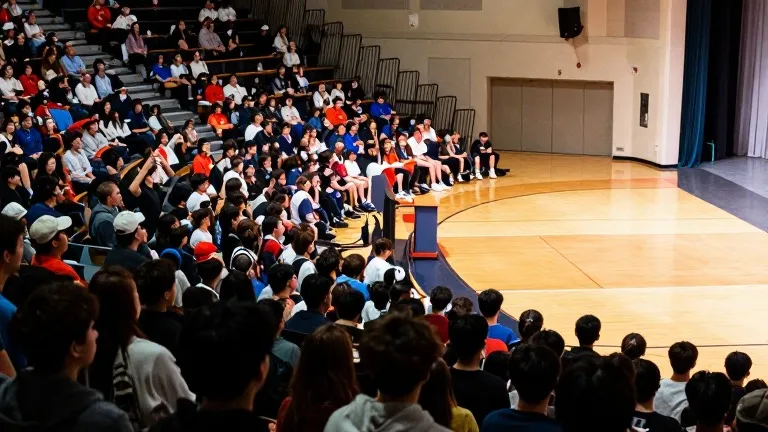
Barack Obama arrived in Detroit on Saturday to close the gap for Abdul El-Sayed, the Democratic nominee for Senate. Speaking to thousands at Cass Technical High School, Obama argued that El-Sayed would reverse political influence in favor of working households. He described the campaign as a fight to move money out of politics and into voter pockets. The event took place on the first day of early voting ahead of the November 3 general election.
Obama pledged that El-Sayed would complete the work begun under the Affordable Care Act. He promised to guarantee quality, affordable healthcare for all Americans. This marked Obama's first public endorsement of El-Sayed, a physician and former Wayne County health official. El-Sayed won the August primary after a contentious contest against Haley Stevens, a moderate congresswoman backed by the party establishment. Obama had previously stayed out of that primary fight.
The former president launched a direct attack on Donald Trump, accusing him of enriching his family through his administration. Obama claimed the White House had created a culture of taking favors. He criticized Defense Secretary Pete Hegseth for focusing on the physical appearance of troops rather than their readiness. Obama also mocked Trump's obsession with Canada, calling it the evil empire next door. He noted that the country provides maple syrup and Martin Short.
Obama ridiculed the White House renovations, comparing the aesthetic to a Cheesecake Factory owned by Saddam Hussein. He suggested Trump should appear on home improvement television instead of governing. These remarks followed a similar stop in Cleveland earlier that day, where Obama campaigned for Sherrod Brown and Amy Acton. The Cleveland event featured comparable criticism of the Republican leadership and the current administration's priorities.
Tensions existed between Obama and El-Sayed over healthcare policy before the primary. El-Sayed, a proponent of Medicare for All, had previously called the Affordable Care Act an incremental fix. The two spoke by phone after the August vote, and El-Sayed now views Obama as a mentor. Obama acknowledged their past disagreements, stating they would not agree on every detail. He noted that even Michelle Obama does not agree with everything he does.
El-Sayed faces a specific challenge in Wayne County, where Detroit is the county seat. In the August primary, Haley Stevens outperformed him in that region by approximately 51 percent to 45 percent. Obama last campaigned in Detroit in October 2024 for Kamala Harris. Harris also visited the city with El-Sayed last month. The city is more than three-quarters Black, a demographic that Obama has historically targeted in swing states.
The Senate race remains competitive according to current data. Mike Rogers, a former congressman endorsed by Trump, trails El-Sayed in polling but holds a slight edge in some measurements. A Marist poll from mid-October showed El-Sayed at 50 percent and Rogers at 48 percent. RealClearPolitics averages place El-Sayed ahead by about 2.6 points. The Cook Political Report rates the contest a toss-up. Republicans have not held a Michigan Senate seat for 25 years, but they view this race as a key opportunity for a comeback.
Slotkin, a featured speaker at the rally, emphasized the need to elect fighters. She said the two candidates agree on most issues despite minor differences. She framed the election as a check on the Trump administration. Trump plans to visit Port Huron on Sunday for a rally with state Republicans. That city is on the Canadian border and has not hosted a sitting president before. If elected, El-Sayed would become the first Muslim and first Egyptian American in the U.S. Senate.
More Politics · World news · Report a business · Got a Story?