100,000 reservists return to fight as Perez links war effort to family bond
The World Zionist Organization president cites the mass return of soldiers and the recovery of hostages as evidence of deep familial ties.
By Ana Castro ·
Rabbi Doron Perez, who serves as president of the World Zionist Organization and chairman of the World Mizrachi movement, has released a new book titled Smallest Nation, Largest Family. In the work, he argues that the Jewish people function primarily as a family rather than just a nation or religion. He believes this specific bond forms the foundation of Jewish identity.
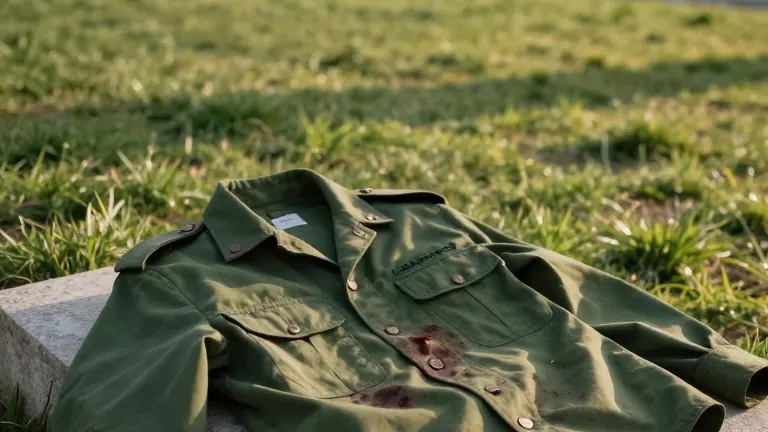
The text draws heavily on Perez’s personal grief. His son, Daniel, died in battle on October 7, 2023, while defending Kibbutz Nahal Oz as a tank commander in the 7th Armored Brigade. Hamas held Daniel’s body for two years. The family learned of his death on March 17, 2024, when the Israel Defense Forces presented video evidence. They initially buried only his bloodstained uniform shirt on Mount Herzl, waiting for his return.
On October 13, 2025, Perez watched the return of the final group of living hostages on television. A friend in Cape Town sent him a message that night: "We may be the smallest nation in the world, but we are the largest family." That evening, during Simchat Torah, Daniel’s body was returned. Perez delivered eulogies at a second funeral on Mount Herzl, stating that clarity at home helps resolve issues abroad.
Perez notes that President Isaac Herzog and Prime Minister Benjamin Netanyahu later quoted his concept of the Jewish people as a family. He compares the national effort to recover hostages to the biblical figure Abraham saving his nephew Lot. He views this as a powerful expression of familial instinct. The book also references the 1911 case of Mendel Beilis in Kyiv, who was falsely accused of ritual murder. The global Jewish community rallied to his defense, proving that an unknown Jew is still a brother to the entire people.
The author points to the early weeks of the war in 2023, when 100,000 Israelis returned to fight. Many left vacations in places like Goa to rejoin their homeland. Perez says this confused non-Jewish observers who could not understand the drive to return to a war zone. He argues that Jews fight for their home and family, not just their country. He also cites the Passover Seder’s "Four Sons" passage as a model for respecting different viewpoints within a single family table.
Perez observes that rising global antisemitism has forced Jews in the Diaspora to confront their identity. He notes that Jews in America, Canada, and Australia have felt the impact of the conflict, leading to a renewed sense of shared fate. He sees this opposition as an opportunity to rediscover Jewish tradition and destiny. The book concludes with ten suggestions for building a healthy society, including unity and humility.