Oil Prices Drop 20% as Democrats Seize Control of Congress
Market shifts follow the US midterm election, prompting Australian officials to reassess trade, defense, and energy strategies.
By Ana Castro ·
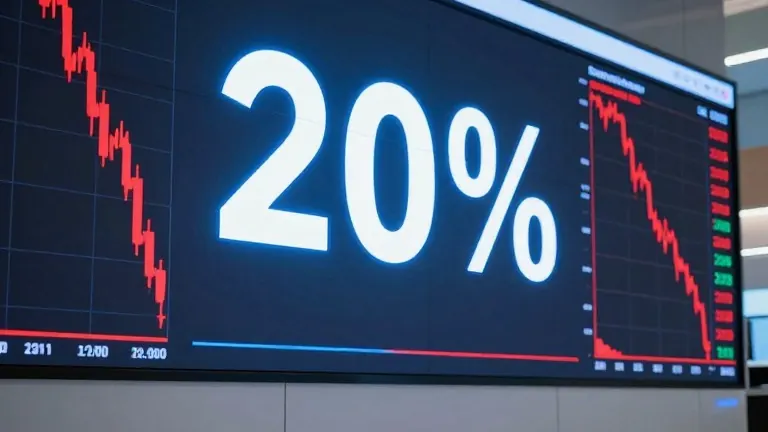
Global oil markets reacted sharply to the US midterm election results, with Brent crude prices falling by 20 percent. The drop occurred immediately after Democrats secured control of Congress, reversing a trend where prices had approached their April peak. This sudden shift in financial data has forced a rapid reassessment of economic policies in Australia and other allied nations.
The change in Washington has immediate implications for inflation and central bank strategy. Elliot Clarke, head of international economics at Westpac, noted that the Democratic victory alters the outlook for the Middle East conflict. He explained that increased confidence in resolving the war could curb inflation. This development may allow central banks to pause rate hikes, changing the economic calculus for countries like Australia.
Domestic political analysts are drawing parallels between US voter behavior and local economic pressures. Bruce Wolpe, a senior fellow at the United States Studies Centre, identified rising living costs and fuel prices as the primary drivers of the US election outcome. He warned that the Albanese government faces similar challenges due to the economic fallout from the recent conflict with Iran. Wolpe stated that public confidence waned after the budget process, leaving citizens uncertain about the economic trajectory.
Australian politicians and diplomats are adjusting their messaging to reflect the new reality in Washington. Coalition frontbencher Andrew Hastie told 2GB that voters in both countries feel the impact of tariffs and the Iran war. He argued that the Australian government must prioritize delivering better outcomes for its citizens. Former ambassador Arthur Sinodinos suggested the new Congressional makeup offers an opportunity to advance policy goals with both US parties while looking beyond the 2028 presidential election.
The shift also influences strategic alliances and geopolitical calculations. Sinodinos raised the possibility that the new Congress might pressure the administration to support Ukraine with more funding for munitions. He noted that while China may feel emboldened by the US political shift, he did not expect sudden action on Taiwan. Former industry minister Ed Husic called for a more radical reset of the relationship, arguing that a different Congress would require the White House to avoid tariffs that hurt allies.
Energy infrastructure remains a point of contention in the evolving trade relationship. Husic pointed to potential changes in US AI regulation that could influence Australian legislation planned for 2027. Vermont senator Bernie Sanders has called for a moratorium on new datacentre construction to protect the environment. Acting Prime Minister Richard Marles acknowledged that both countries are grappling with the social licence for datacentres, emphasizing the need to ensure they are built in appropriate locations with adequate power and water resources.
Abbe Denmark, a partner at The Asia Group and architect of Aukus, cautioned against over-interpreting the results. He noted that power is now distributed among new centers, including Democratic chairs and Republican members willing to break ranks. Denmark warned that while this creates more engagement points for Canberra, it also generates more political noise that must be distinguished from durable policy. In the US, President Trump claimed Republicans performed poorly because he was not on the ballot, while Vice President JD Vance cited the Iran war as the main factor in the results.
More Business · World news · Buyer Beware · Report a business · Got a Story?