Breaking: VIX Surges as Hedge Fund Liquidation Triggers Tech Rout
The volatility index hit its highest level since March as investors fled to Treasuries amid fears of a momentum unwind in AI stocks.
By Ana Castro ·
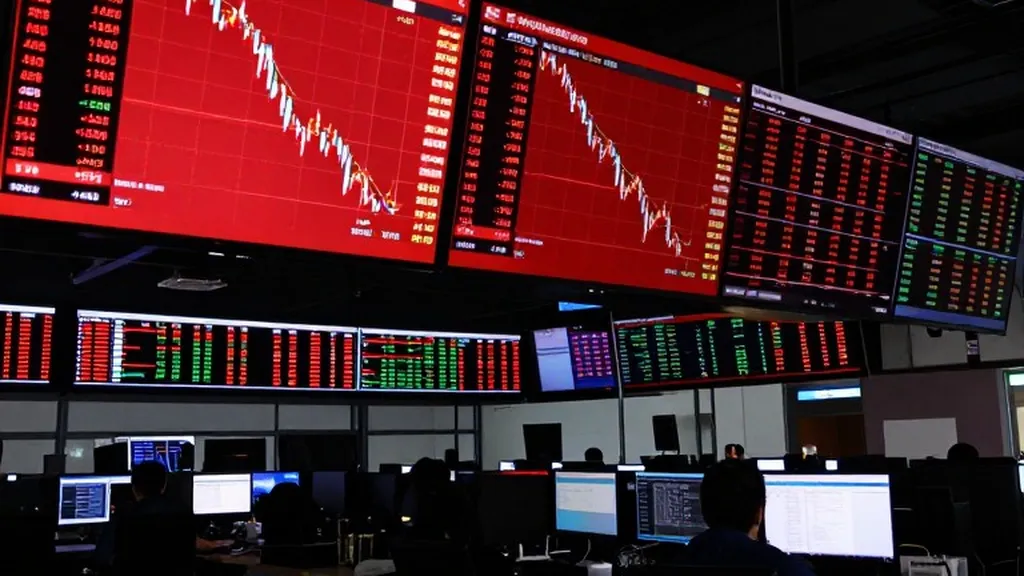
The Cboe Volatility Index, known as the market's fear gauge, jumped as much as 5.7 points to above 28 roughly 90 minutes after the opening bell on Thursday. This marked its highest reading since March 31, 2026, the day after the S&P 500 bottomed during the Iran war tensions. The surge in volatility signaled a sharp shift in sentiment as traders reacted to the political developments following Tuesday's midterm elections. The VIX moved more than 11 points from its low to its high, which represented its biggest one-day move since April 9. The index was up 61 percent for the day, highlighting the intensity of the sell-off.
The spike in the VIX was accompanied by an unprecedented frenzy in options trading. By midday, nearly 800,000 VIX call options had traded, a volume that was 3.5 times the 30-day average. This surge in call options indicated that a significant number of investors were hedging against further downside or betting on continued volatility. The activity suggested that market participants were bracing for continued turbulence, particularly in the technology sector which had been the primary driver of recent market gains.
Amid the volatility, there was growing talk on the trading floor about a specific hedge fund liquidation that may have triggered the selling. Noel Smith, an options trader, noted that while his data suggested de-risking, his gut felt the event could create a dip-buying opportunity. He observed that oil and interest rates remained relatively unchanged, which pointed to a specific sectoral issue rather than a macroeconomic shock. Smith stated that the tape looked like a liquidation and that this was exactly what he was hearing regarding a hedge fund, suggesting that forced selling from a large position was a key driver of the day's declines.
The flight from risky assets was evident in the bond market as investors sought safety. The 10-year Treasury yield fell to 4.83 percent, its lowest level since September, as money flowed into government bonds. This move highlighted the traditional safe haven status of Treasuries during periods of equity market stress. The decline in yields provided a cushion for some fixed-income investors but underscored the risk-off nature of the session. The movement in rates further confirmed that the sell-off was driven by a desire to reduce exposure to high-growth technology stocks.
The equity market damage was severe across major indices. The S&P 500 fell 4.3 percent, marking its worst day since April 2025 when President Trump announced sweeping global tariffs. The Nasdaq Composite dropped 5.5 percent, its worst day in 18 months, and closed more than 11 percent below the record it set last month. This decline placed the index in correction territory, defined as a fall of at least 10 percent from a recent high. The Dow Jones Industrial Average fell more than 1,800 points, a drop of 3.4 percent, to 51,868, erasing the gains made the previous day.
Technology stocks bore the brunt of the selling, with the Magnificent Seven companies shedding about $1 trillion in value in the single trading day. Nvidia fell 9.2 percent, losing more than $400 billion in market value, while Tesla fell nearly 11 percent and SpaceX fell 8 percent. The Philadelphia Semiconductor Index, which tracks 30 of the largest chip companies, fell more than 12 percent. This index has fallen more than 30 percent since the beginning of October and is almost 40 percent below its peak in June. The iShares Semiconductor ETF fell 12 percent, its worst day since the breakout in March 2020.
The catalyst for the rout was the Democrats' sweep of the House and Senate in Tuesday's midterm elections. Voters in various states rejected data centers in a series of local ballots, and Democrat Gina Hinojosa won the race for governor in Texas after campaigning on an immediate moratorium on new data center construction. These results heightened concerns that the facilities at the heart of the AI build-out will face new hurdles. Investors are now weighing whether tighter state-level restrictions could slow data center construction, adding to broader concerns that the huge sums being spent on AI may not pay off and that AI shares may be in a bubble.
Neil Wilson, investor strategist at Saxo UK, described the situation as a complete capitulation-level event playing out in tech stocks. He noted that the fear was a total momentum unwind as Democrats paced the frontier and potentially stopped the data center buildout. Wilson added that while the move looked totally overdone, the nature of sell everything dynamics in this market meant that traders needed to look for some stability first. This sentiment reflected the uncertainty among professionals about whether the decline was a temporary correction or the start of a longer trend.
Susannah Streeter, chief investment strategist at Wealth Club, said fresh panic over the AI trade had hit Wall Street hard. She noted that fears that the vast sums poured into AI infrastructure may not deliver the returns investors have been banking on are now colliding with the prospect of a sharp slowdown in data center construction. This view was echoed by Ted Parkhill, founder of Incline Investment Management, who said the market was moving from the promise of AI to the price of AI. Parkhill suggested that there would be a lot of turmoil as the industry adjusted to the new political reality.
More Business · Buyer Beware · Report a business · Got a Story?