USDA: Trump administration pledges $15 billion in farm aid before midterms
The federal government announced $15 billion in payments and loans to offset rising fuel and fertilizer costs, a move aimed at securing support in rural voting districts on Tuesday.
By Giulia Donovan ·
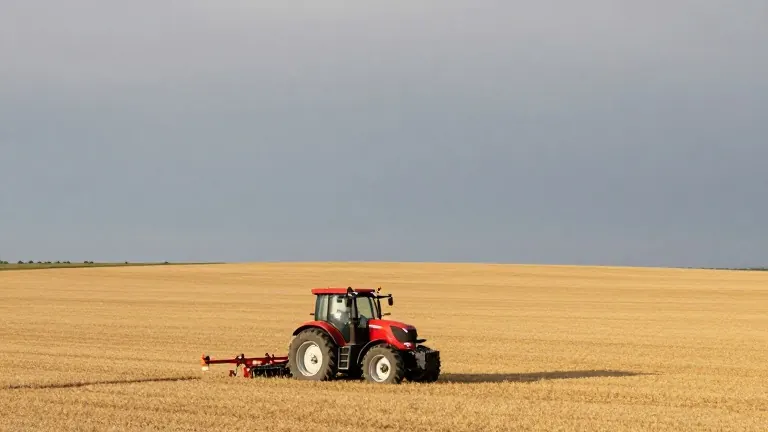
The Trump administration announced $15 billion in financial support for U.S. farmers ahead of Tuesday's legislative elections. The funds are designed to offset steep increases in diesel and fertilizer prices that growers have absorbed due to presidential tariffs and the conflict in Iran.
The Department of Agriculture (USDA) detailed the plan on Thursday. More than half of the total, an $8 billion one-time payment package, will go directly to farmers facing high fuel costs. The agency said it will release more details on the distribution of these funds this month, though the timeline for payments reaching truck, tractor, and combine operators remains unclear.
In addition to the direct payments, the USDA expects to distribute $13.8 billion in safety net program payments for the 2025 crop year. These funds will cover shortfalls for producers of corn, soybeans, wheat, and rice. The agency also announced $5 billion in guaranteed loans for ranchers and fishers.
Smaller allocations target specific sectors of the industry. The administration committed $1.8 billion to producers and landowners in conservation programs, $573 million to fertilizer manufacturing projects, and $57 million to expand meat processors. Producers of specialty crops will receive $86.6 million in grants for innovative projects. The USDA also reported it will purchase up to $472.5 million in agricultural products for charitable programs.
Diesel prices remain a major point of contention. On Friday, the average price was $6.32 per gallon, according to the AAA. That figure is 70% higher than a year ago, meaning a full 100-gallon tank now costs $260 more than it did in 2025.
Gregg Ibendahl, an agricultural management specialist at Kansas State University, estimated the new payments would cover the increased fuel costs and help with fertilizer expenses. He noted that while these ad-hoc payments will help farmers stay profitable this year, they do not solve the underlying price pressures.
Alexandra Middlewood, an associate professor of political science at Wichita State University, said farmers are relieved their businesses will survive the year but view the aid as a temporary fix. She noted that many rural voters feel the administration has not done enough to address cost of living and healthcare access, despite campaign claims of a booming economy.
Michael Smith, a political science professor at Emporia State University, observed that while many rural voters like Trump personally, they are scrutinizing his policies. He stated that this election is not about Trump, who is not on the ballot, but about his policies and how they affect independent voters who will decide the outcome.
More Business · Buyer Beware · Report a business · Got a Story?