Kinney and Austin Race in Solid-Party Districts Against Long Odds
Two challengers in Wyoming and Connecticut describe the financial and logistical strain of competing in seats that have not changed hands in decades.
By Giulia Donovan ·

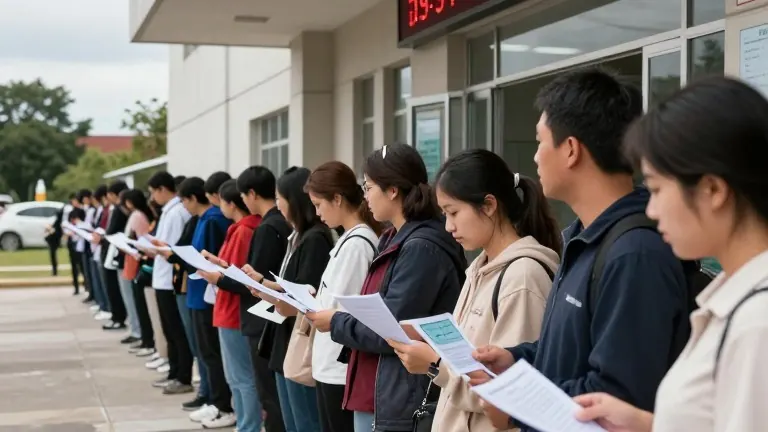
Eighty percent of congressional races this year are rated as solidly held by one party, according to political analysis. This leaves challengers in the remaining seats to compete with limited resources, fewer donors, and small staffs in districts that have voted for the same party for years.
Lisa Kinney, a former state senator, is running as a Democrat in Wyoming, a state that has sent only Republicans to the House since the late 1970s. She campaigns on a moderate platform, focusing on preserving public lands and lowering health care costs. Her husband, Rodney Lang, says the campaign aims to strengthen the state party infrastructure even if the election is lost.
Kinney often meets voters in person because she lacks a traditional campaign office. She describes the process as tiring but necessary to make potential voters comfortable. In Casper, she spoke with Joe Beck, an independent voter who already cast his ballot for her but warned of a "tsunami" of Republican support in the state.
Across the country, George Austin, a home builder and former football coach, is running as a Republican in Connecticut's second congressional district. The seat has been held by Democrat Joe Courtney for 20 years. Democrats have won all 45 U.S. House elections in the state since 2008. Austin says he wants to restore balance to representation and encourage other working people to run.
Austin has contributed $250,000 of his own money to the campaign. He serves as his own scheduler and volunteer coordinator. He notes that voters in his district often disengage when they learn he is a Republican, citing the national party identity as a barrier.
Eric Ostermeier, founder of Smart Politics, notes that 19 state delegations currently consist entirely of members from the same political party. He identifies this as the highest number since 1953. Ostermeier attributes this trend to gerrymandering, geographic sorting of voters, and the difficulty of separating state candidates from their national party brands.
In Connecticut, 46 of the 187 state legislative seats are uncontested. Nationally, many state legislative seats are decided before Election Day due to a lack of competitive challengers. Austin says he is running to show that these races are worth fighting, despite the high probability of defeat for a political minority candidate.