Amazon scraps four Northern Virginia data centers for housing and arts
The tech giant will convert 122 acres in Loudoun County into mixed-use development and donate land for public facilities after local residents raised concerns about power and noise.
By Gabriela Ivanov ·
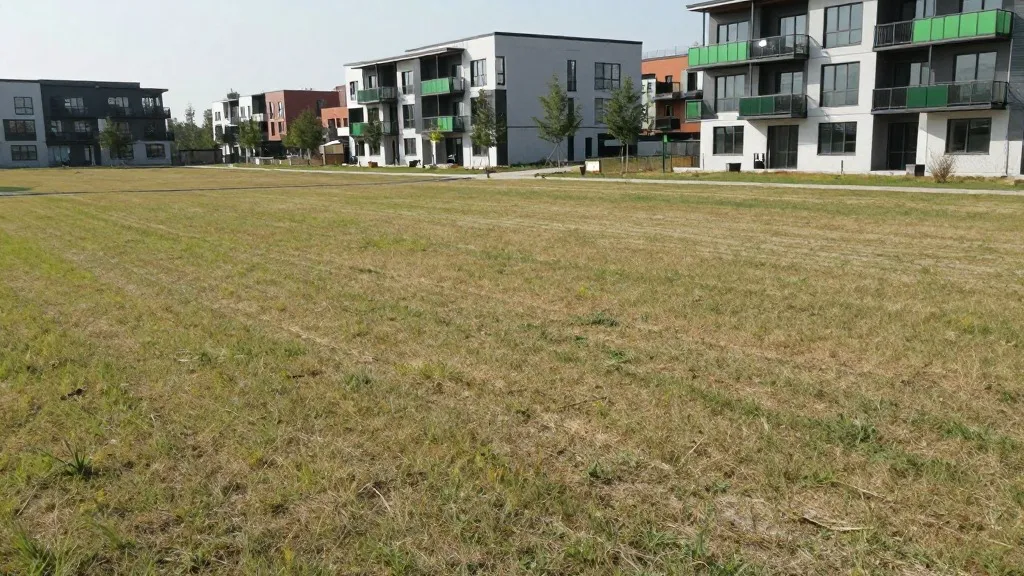
For residents of Loudoun County, the immediate impact of this week's announcement is a shift in their local landscape and housing market. Amazon has officially withdrawn its proposal to construct four new data centers on a 122-acre site formerly part of George Washington University's campus. Instead of server farms, the majority of the land will be developed for mixed-use and residential projects. Additionally, the company will donate 25 acres to the county for a community arts center and recreational facility, while also contributing $5 million to the local housing fund. This direct financial injection and change in land use offers a tangible alternative to the industrial infrastructure that previously dominated the proposal.
The decision marks a significant pivot for a region already known as Data Center Alley due to its high density of computing facilities. Amazon initially submitted its proposal in July, but faced mounting opposition from locals who cited concerns over noise pollution and the massive energy demands of these operations. In September, Amazon met with Phyllis J. Randall, the chair of the Loudoun County Board of Supervisors. During that meeting, county officials suggested the company might be better served by exploring an alternative use for the property, a suggestion Amazon has now accepted.
Josh Weissman, Amazon's vice president for data center development, acknowledged the tension between the company's plans and local priorities. He stated that while the firm viewed the property's legal development potential differently than the county, they decided that a shared vision was preferable to costly litigation. Weissman noted that the company considered the pointed concerns regarding data center development at this specific location. The move avoids a potential legal battle and allows the company to maintain a positive relationship with local stakeholders.
This development occurs against a backdrop of rising national tension over the energy footprint of artificial intelligence. The rapid expansion of AI has driven demand for larger facilities, leading to increased electricity costs for local communities. Just days before this news, President Donald Trump called on data center builders and AI hyperscalers to pay dividends to local communities to offset energy price spikes. He proposed that these facilities should generate their own power and sell excess energy back to the grid, highlighting the growing political focus on the economic and environmental costs of the tech boom.
County officials have framed the outcome as a success of negotiation over conflict. Randall stated that choosing dialogue allowed the county to create new spaces for residents to gather and play. She emphasized that the agreement will provide more attainable homes for working families, a critical factor in the competitive Northern Virginia housing market. The resolution replaces a future industrial hub with a combination of residential living and public amenities.
The next steps involve the formalization of the land use changes and the allocation of the $5 million housing fund. For the market, this signals that local opposition can successfully alter the trajectory of large-scale tech infrastructure projects, even in areas with high demand for computing power. The repurposing of the site sets a precedent for how companies might approach future real estate acquisitions in densely populated or environmentally sensitive areas.
Analysts will likely watch to see if other hyperscalers adopt similar flexible strategies in their regional expansion plans. The deal in Loudoun County demonstrates that the cost of local backlash, including potential litigation and community friction, can outweigh the strategic value of additional data center capacity in certain locations. The transition from commercial tech space to mixed-use development will also influence local real estate values and community planning in the years to come.
More Business · Buyer Beware · Report a business · Got a Story?