40 New Settlements Planned in Naqab as Israeli Election Approaches
Finance Minister Bezalel Smotrich’s proposal targets Palestinian heartlands with new housing and farms, adding to existing threats from organized crime and militarized policing.
By Gabriela Ivanov ·
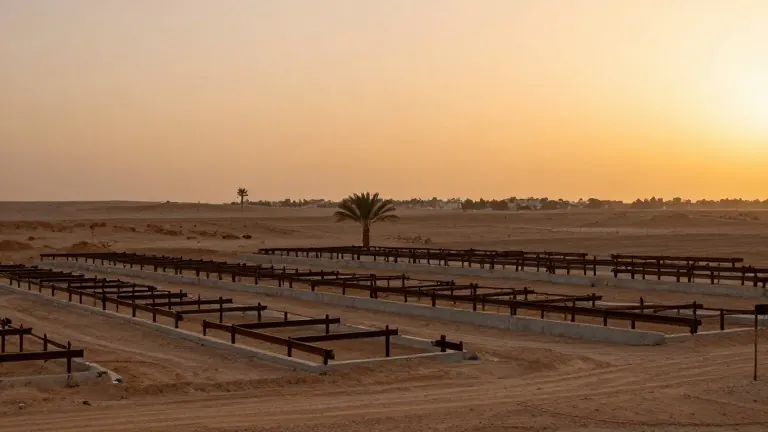
Finance Minister Bezalel Smotrich has unveiled a plan to establish 40 new settlements in the Naqab and northern Israel. The proposal aims to add one million Jewish residents to these regions. It also includes the creation of dozens of new farms and hundreds of thousands of housing units.
This plan targets areas where Palestinian communities are concentrated. It seeks to extend a model of territorial control previously used in the West Bank. The initiative is part of a broader effort described as the 'Judaisation' of the land. This process has accelerated since October 2023.
Palestinian citizens of Israel make up 20 percent of the population. They face increasing threats to their political and collective rights as the political mainstream shifts right. Communities report more violence from criminal networks that have obtained advanced weapons. These arms were reportedly stolen from army stockpiles or smuggled across borders. Law enforcement has largely ignored the issue, leading to hundreds of deaths.
The government is also changing how it manages security. National Security Minister Itamar Ben-Gvir has issued 300,000 gun licenses since taking office. This expansion of personal firearms access normalizes civilian policing. The National Guard, established under Ben-Gvir, may increasingly police Palestinian towns. This force was created in response to the May 2021 Dignity Uprising in cities like Haifa and Lydd.
Parties representing Palestinian citizens, such as Ra’am, argue that voting for the anti-Netanyahu bloc can remove the far right from power. However, their experience in the 2021 coalition government showed this strategy has limits. Member Mazen Ghnaim acknowledged in 2022 that his party could not push through policies benefiting the Palestinian population despite being in government. The coalition collapsed without delivering fundamental changes.
Citizenship granted in 1952 has not secured substantive equality for Palestinians. They continue to face discriminatory laws and systemic underfunding of basic services. The state has used land confiscation and educational regulations to reshape Palestinian identity. This separates their national belonging from their historical context. Recent settler expansion in mixed cities like Jaffa and Lydd began in 2021 and continues.
The election on October 27 offers a choice between Prime Minister Benjamin Netanyahu and opposition led by Gadi Eisenkot. For many Palestinians, the vote is a way to slow the current trajectory rather than reverse it. The author of the analysis plans to vote to prevent four more years of far-right rule. He believes electoral participation must be paired with radical political responses. This includes reforming the High Follow-Up Committee and building grassroots organizing structures.
The fate of Palestinian citizens in Israel is linked to the fate of Palestinians in the West Bank and Gaza. The cultural shift toward far-right ideologies is becoming embedded in social attitudes. This transformation extends beyond the government. It affects everyday life and the distribution of coercive power in society.