221 Trucking Firms File Bankruptcy as Small Carriers Face Rising Costs
Diesel prices, insurance premiums, and debt burdens are pushing independent owners toward closure ahead of midterms.
By Ana Castro ·
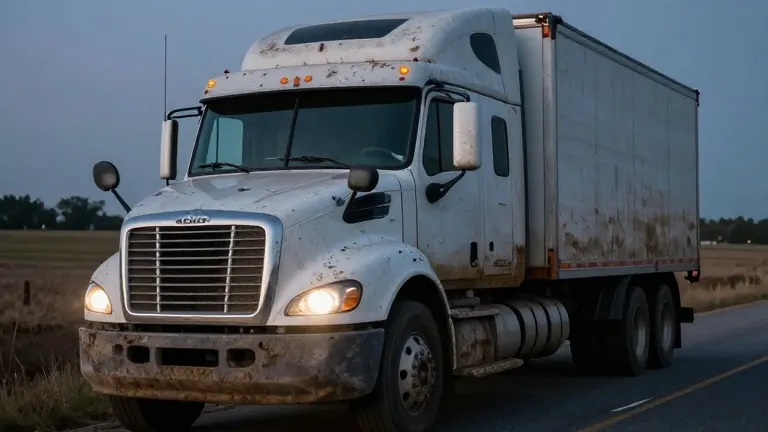
Two hundred twenty-one trucking companies have filed for bankruptcy protection in the United States this year. The number extends a three-year spike that has reached levels not seen in decades. These filings represent a major strain on the industry's smaller players.
Data compiled by Bloomberg shows the surge in insolvency cases. The trend is occurring as affordability concerns dominate voter discussions ahead of next week’s midterm elections. Small carriers, typically those operating twenty or fewer tractors, are feeling the financial pressure most acutely.
A survey of hundreds of small operators by Truckstop and Bloomberg Intelligence found that approximately two-thirds report flat or declining revenue compared to the previous year. Almost forty percent of these operators expect to exit the industry within six months or are uncertain about their future status. The survey was conducted over the past two months.
Justin Stoneman has operated in the trucking industry for twenty-seven years. His company, Stoneman Trucking LLC, was based in central Michigan and hauled grain and fertilizer. At its peak, his fleet of twelve tractor trailers generated more than $3 million in annual revenue. In May, his company filed for bankruptcy protection. He is now shifting to Chapter 7 to shut down operations.
Stoneman cited war-fueled spikes in diesel prices, rising insurance costs, and heavy debt as primary factors. He took out two merchant cash advances totaling around $125,000 in 2023. After a driver accident, an insurance company quoted him $155,000 to cover two trucks and three trailers. “I’m so frustrated,” Stoneman said. “It’s like, what about all this ‘Drill, baby, drill’?”
Chip Lane, managing partner at Lane Law Firm in Texas, reports a massive uptick in restructuring inquiries. He sees three or four trucking companies approach his firm weekly. Lane attributes the vulnerability to the industry's entry economics. Many small operators lack the cash to buy equipment outright and rely heavily on credit. This makes them more sensitive to cost increases than large carriers like J.B. Hunt Transport Services Inc.
Christopher Ward, a bankruptcy partner at Lowenstein Sandler, noted that large firms can absorb higher fuel prices more easily. A one-rig firm with limited equipment debt and a clean safety record is better positioned to survive. Aaron Graft, CEO of Triumph Financial, described the current market as a feast or famine. J.B. Hunt stated this month that it is raising prices to offset compressed margins, a move not always available to smaller competitors.
The current downturn follows a contraction from the pandemic-era boom. Near-zero interest rates and government loans encouraged many new entries. When demand normalized, rates plummeted, causing a deep industry recession. Survivors are now facing what Lane calls a triple whammy: higher fuel prices, rising interest rates, and burdensome credit arrangements. These include variable-rate loans and merchant cash advances that increase debt loads.
Fraud and labor issues are adding to the strain. Freight fraud costs the industry an estimated $18 million per day, according to the Highway’s Freight Fraud Index. Identity theft allows fraudsters to use clean safety records to intercept cargo. Jennifer Lockett, operations manager at factoring company altLINE, stated that insurance bills are climbing due to fraud and violations. Labor costs are also rising as regulators enforce English-language proficiency requirements and government deportation efforts deter some drivers from working. Kevin McAllister, who closed his three-truck business in 2024, said he was relieved to exit. “It was almost like treading water,” McAllister said.
More Business · Buyer Beware · Report a business · Got a Story?