110 Degrees: Utah Engineers Find Cooler Way to Destroy PFAS
A new defluorination method breaks down stubborn chemicals at temperatures far below standard incineration, avoiding the creation of volatile secondary pollutants.
By Ana Castro ·
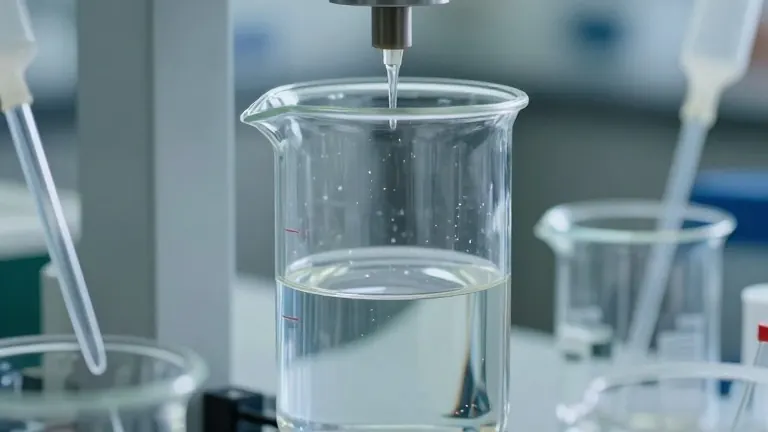
Ling Zang, a distinguished professor in materials science at the University of Utah, has led a team in developing a chemical process that destroys per- and polyfluoroalkyl substances, or PFAS, at temperatures as low as 110 degrees Celsius. The study, published in the journal Communications Chemistry on October 28, offers a potential solution to the problem of treating these persistent pollutants after they have been filtered from water.
Zang and her colleagues at the John and Marcia Price College of Engineering used reactive chemicals known as nucleophiles to sever the strong carbon-fluorine bonds that make PFAS resistant to natural breakdown. This process, called defluorination, released nearly all the fluorine from tested compounds, including PFOA and trifluoroacetic acid. The method also proved effective against two fluorinated plastics, PVDF and PCTFE, which are common components in batteries and munitions.
The primary advantage of this approach is the reduced heat required. Standard incineration of PFAS typically requires temperatures of 1,000 degrees Celsius or higher. The new method operates at or below 230 degrees Fahrenheit for most tests, with some materials requiring up to 150 degrees Celsius. Zang stated that the goal is to detoxify these chemicals so that cleanup does not simply move contamination from water into another waste stream.
Incineration presents risks because incomplete breakdown can create secondary pollutants. These byproducts are often smaller and more volatile than the original chemicals, allowing them to disperse through the atmosphere. The Utah team’s method works in ordinary air and avoids the need for specialized conditions such as inert gas atmospheres, deep-ultraviolet irradiation, or heavy-metal catalysts.
The research remains at the laboratory stage. Future studies will focus on testing the method with real waste streams and evaluating treatment costs. The team also plans to determine the safety of the remaining products after defluorination. Zang’s previous work has focused on removing PFAS through filtration, and this new study builds on that foundation by addressing the destruction phase of the cleanup process.
The study was funded by Gentex Corp., a company where Zang serves on the board of directors. Zang and two co-authors, Pallabita Basu and Saravanakumar Manickam, are listed as inventors on patent applications filed by the university. The full author list also includes Rana Dalapati, Jiangfan Shi, Matthew Hunter, and Xiaomei Yang from the Department of Materials Science & Engineering.