Alphabet Sends TPUs to Oracle for External Sale
The chip vendor will make its custom silicon available outside Google Cloud infrastructure for the first time, a move that could reshape its cloud margin profile and challenge Nvidia's dominance.
By Ana Castro ·
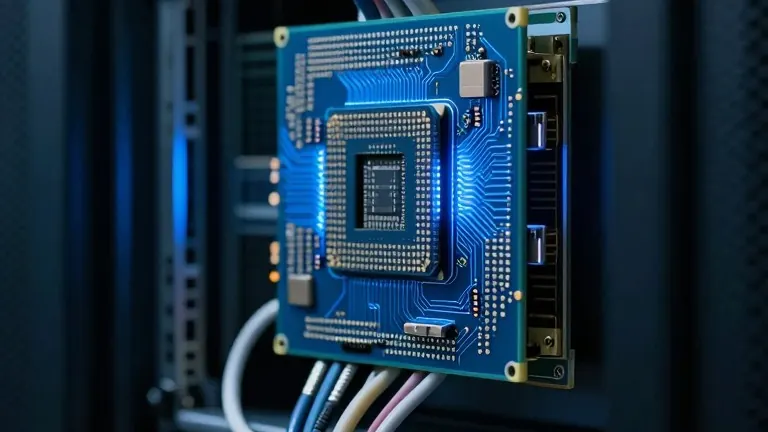
Alphabet announced on Tuesday that Oracle will offer Google's tensor processing units to customers. This marks the first time the custom chips, developed internally since 2013, will be accessible outside of Google's own data centers. The company revealed the partnership on the day before releasing its third-quarter earnings report.
The decision represents a strategic shift for Google Cloud chief Thomas Kurian. Kurian spent more than 20 years at Oracle before joining Google in late 2018. He is now seeking growth by selling hardware to external partners rather than restricting access to the company's proprietary stack. Analysts expect Google Cloud revenue to rise about 90% from a year earlier, following an 82% increase in the second quarter. TPUs are a primary driver of that momentum.
Market observers view the move as an aggressive play against Nvidia, which has long dominated the AI chip market. Chris Ballard, managing director of Check Capital Management, noted that Google is a strong competitor that could eventually take market share from Nvidia. Uday Cheruvu, a portfolio manager at Harding Loevner, said Google's mindset has changed from focusing solely on internal optimization to serving external customers.
Financial projections for the TPU business vary among analysts but all indicate rapid expansion. TD Cowen models $9.4 billion in TPU sales for the second half of 2026 and $62.5 billion for 2027. Wells Fargo expects about $9 billion in third-quarter sales and $99 billion next year. Chief Financial Officer Anat Ashkenazi stated in July that only a small portion of TPU revenue from existing agreements will be recognized this year, with the vast majority arriving in 2027.
Selling chips externally introduces trade-offs for Google's financial performance. TD Cowen estimates a 20% operating margin on TPU sales, compared with an overall cloud margin of about 35% in the last quarter. Cheruvu does not expect Google's cloud operating margin to widen much beyond the mid-30s. Google declined to comment on how the partnership will affect its margins.
Kurian must balance external sales with internal efficiency. At a Goldman Sachs conference in September, he said Google's AI servers pay for themselves in under two years. Servers running Google's own silicon reach payback in about half that time. He attributed the efficiency to the company's ability to optimize the whole stack. SemiAnalysis estimates that the latest Ironwood TPU costs about 44% less to own and operate than an Nvidia GB200 server.
Google's largest TPU customer is Anthropic, a company whose Claude models compete directly with Google's Gemini. Anthropic agreed last October to use up to 1 million TPUs in a deal worth tens of billions of dollars. Mizuho describes the agreement as Google arming its closest model competitor. CNBC also confirmed that OpenAI plans to buy TPUs from Google, following a report from The Information on Tuesday.
Anthropic is receiving financing support to purchase the hardware. Broadcom, which collaborates with Google on TPU development, detailed a $63 billion vehicle backed by Blackstone and three large banks this week. The vehicle will buy TPUs and networking gear from Broadcom and lease them to Anthropic for five years. William Blair analysts say the plan covers about half of Anthropic's 2027 needs, suggesting additional financing is likely.
In its IPO filing on Monday, Anthropic stated it uses silicon from Google, Amazon, Nvidia, and Advanced Micro Devices. The company said it selects chips based on the best price-performance and efficiency characteristics for each workload. It added that its partnerships with Google and Broadcom provide access to compute capacity powered by Google TPUs across multiple generations of the platform.
More Tech · National news · Report a business · Got a Story?