Uganda forces returnees from DR Congo to pay for 21 days of isolation
The new mandate comes as the outbreak in the neighboring country kills more than 4,800 people and two travelers passing through Kampala test positive in other nations.
By Gabriela Ivanov ·
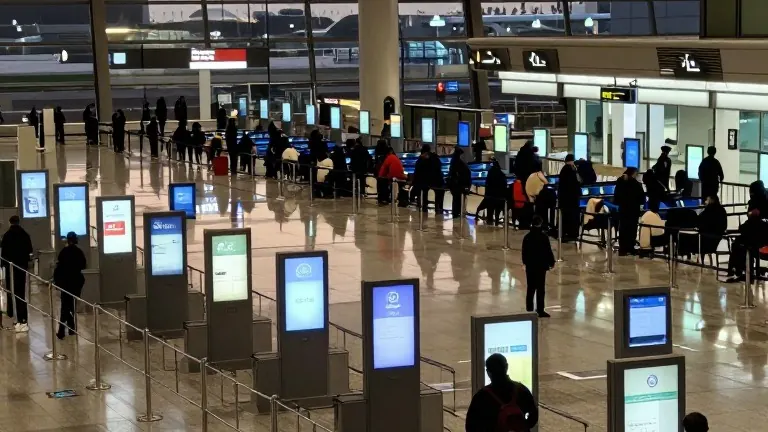
Uganda is now requiring its citizens to pay for their own 21-day quarantine upon returning from the Democratic Republic of Congo. The health ministry announced the rules on Sunday, marking a shift toward stricter border controls as the Ebola outbreak in the region intensifies. The cost of isolation is no longer covered by the state, placing the financial burden directly on travelers.
The new policy imposes three main restrictions on movement between the two countries. First, all returnees from the DR Congo must undergo a 21-day quarantine at their own expense. Second, travelers who have recently been in the DR Congo are prohibited from transiting through Uganda. Third, the ministry has increased screening at Entebbe International Airport and all land border crossings, adding extra checks at specific road checkpoints.
Health Minister Chris Baryomunsi stated that the measures are designed to ensure Uganda remains free of the disease. Speaking to the BBC's Newsday programme, he confirmed that only essential travelers from the DR Congo would be admitted to the country. He described the incoming individuals as facing intense public health measures while emphasizing the need to maintain vigilance.
The decision follows the death of a Kenyan businessman who had traveled from the DR Congo and passed through Uganda. He tested positive in Nairobi and died two days after arrival. His wife, a Ugandan-born diplomat's spouse, later tested positive in Nigeria after a holiday in Kampala. Ugandan officials initially said the two individuals had no physical contact, a claim supported by CCTV footage reviewed by Diana Atwine, the health ministry's permanent secretary.
The current outbreak in the DR Congo has killed more than 4,800 people since May, making it the deadliest in the country's history. The virus, specifically the Bundibugyo species, has spread to several other nations. Uganda had 20 cases and two deaths early in the outbreak but was declared free of the disease by the World Health Organization in August. Officials note that the two countries share a border and strong community ties through trade and family, keeping the risk of transmission high despite the lack of recent local cases.