Supreme Court case puts North Dakota landowners' $380,000 legal bill on the line
Justices questioned whether federal law overrides state protections that require pipeline companies to pay attorneys' fees after eminent domain disputes.
By Gabriela Ivanov ·
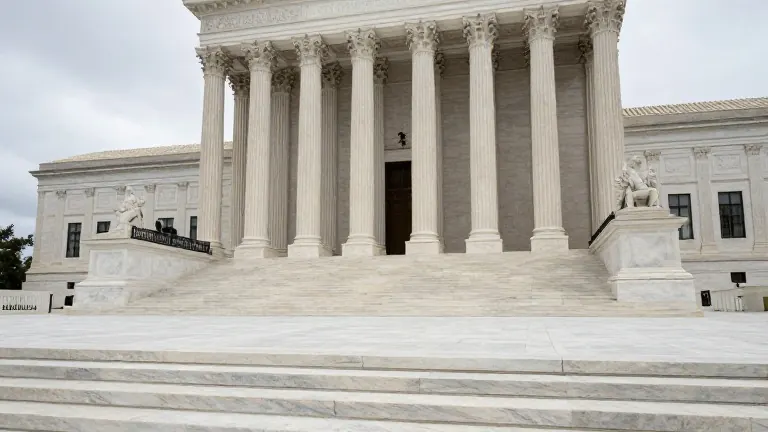
Landowners in North Dakota face a potential shift in how they recover costs after the government takes their property. If the Supreme Court rules in favor of federal law over state law, private companies using eminent domain power would not have to pay the legal fees incurred by owners who win their cases. This outcome would remove a key financial incentive for landowners to pursue fair compensation, as they could be left responsible for substantial court costs even after prevailing.
The dispute stems from a multi-year legal battle involving a pipeline company working on behalf of the government. The company initially offered low-ball payments to the landowners. The owners won the case but were left with $380,000 in legal fees. North Dakota state law requires the pipeline company to cover those fees, but the federal government argues that federal law, not state law, dictates who pays in such federal condemnation cases.
Bob McNamara argued the case before the Supreme Court on Monday. He contended that private companies wielding the power of eminent domain must respect state laws designed to protect private property owners. McNamara stated, “What we’re saying is that when states try to protect private property owners, private companies have to respect those laws. Even private companies wielding the power of eminent domain.”
Justices appeared skeptical of the state law argument during oral arguments. Justice Ketanji Brown Jackson noted that federal law typically governs when federal condemnation is involved. She said, “unless Congress says state law is applicable, when you have federal condemnation by any actor, you would have federal law be the applicable rule.”
The case is currently pending before the Supreme Court. The justices have not yet announced a decision timeline or a ruling on whether federal or state law controls the payment of legal fees in federal eminent domain disputes.