India's 2016 Cash Ban: A Decade Later, Black Money Persists
Ten years after Prime Minister Narendra Modi scrapped 500 and 1,000 rupee notes, data shows currency holdings have tripled and illicit wealth remains largely untouched.
By Ana Castro ·
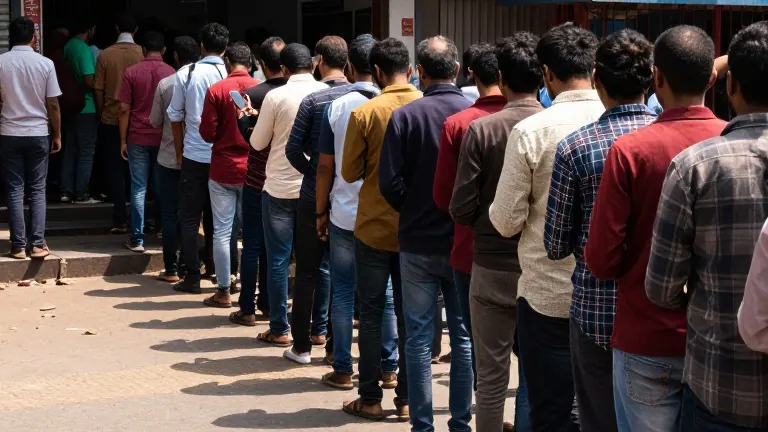
A decade after India withdrew 86.9% of its currency from circulation, the central bank reports that cash in circulation has more than doubled. On November 8, 2016, Prime Minister Narendra Modi announced the immediate invalidation of 500 and 1,000 rupee banknotes in a televised address. He framed the move as a necessary step to eliminate black money, corruption, and counterfeit currency, asking citizens to make a grand sacrifice for the country. Ten years later, economists argue the policy failed to achieve its primary goals while inflicting lasting damage on the informal economy.
The abrupt removal of high-value notes triggered immediate hardship for millions. Banks and ATMs faced long queues as citizens rushed to exchange their savings. Prakash Patra, a businessman in Jaipur, recalled watching a domestic worker's father collapse and die while standing in line to exchange his family's life savings. For rural women and those without bank accounts, the sudden shortage of cash compromised funds set aside for medical emergencies and weddings. Joe Athialy, executive director of the Center for Financial Accountability, stated that the policy destroyed livelihoods and pushed millions into deeper economic insecurity.
The core promise of the demonetization drive was to flush undeclared cash out of the economy. In 2018, the Reserve Bank of India reported that 99.3% of the withdrawn currency returned to the banking system. This high return rate undermined the expectation that large amounts of illicit wealth would be extinguished. Arun Kumar, a former economics professor at Jawaharlal Nehru University, noted that the government wrongly assumed illicit wealth was held primarily in cash. He argued that the move penalized the cash-dependent informal sector while leaving the real engines of the black economy untouched.
Lekha Chakraborty, a professor at the National Institute of Public Finance and Policy, said research indicates modest gains against the policy's objectives alongside temporary but real economic costs. She emphasized that the impact was most severe in the informal sector, where cash remains central to transactions. Chakraborty concluded that there is little evidence to suggest the currency withdrawal produced a lasting change in how black wealth is generated or concealed. Athialy added that cash is only a small part of the black economy, with much unaccounted wealth held in real estate and tax havens.
Digital payments have expanded rapidly since 2016, but this growth did not reduce physical currency. The Unified Payments Interface processed 241.6 billion transactions worth 314.2 trillion rupees in the 2025-26 fiscal year. Despite this digital surge, RBI data shows the value of banknotes in circulation reached 43.15 trillion rupees on October 23, 2026. This figure stands in contrast to the 17.97 trillion rupees in circulation in November 2016. Chakraborty cautioned that digital payments were already growing before the currency ban, making it difficult to attribute the current volume solely to the 2016 policy.
The legacy of the demonetization remains defined by the gap between its promises and outcomes. While the banking system absorbed the vast majority of withdrawn notes, the informal sector bore the brunt of the disruption. Accountability for the economic shock and its institutional consequences remains a point of contention among financial watchdogs and economists. The data confirms that Indians continue to hold substantial amounts of physical cash, a decade after the government sought to drive them toward digital transactions.
More Business · Buyer Beware · Report a business · Got a Story?